Articles

Physicians and Licensing Issues in Divorce

PDF Print

Divorce not only affects the parties emotionally and financially, but can also affect a party’s livelihood. Physicians in Minnesota who divorce should be particularly diligent about adhering to the terms of their divorce. Those who neglect them do so at their peril.

For example, Minnesota law allows for the court to suspend a physician’s license when they fall three months behind in child support payments or spousal support payments or both. Failure to comply with a written payment agreement approved by the court or the child support agency will cause a great deal of professional troubles. Banas Family Law, P.A. has worked with physicians to address these concerns.

Read more... [Physicians and Licensing Issues in Divorce]
 

The Challenges of Parental Relocation Requests in Minnesota

PDF Print

Life after a Minnesota divorce can be difficult in more ways than one. After you've gotten divorced, you may face an adjustment period to a newly single life, possible reduced income, and, in the case of kids, life as a single parent.

When it comes to your kids, you're probably a bit more strapped for time. And depending on your child custody agreement, you also now have to share your child's time with your former spouse through court-ordered child visitation.

Whether you got divorced in St. Paul 2 months ago, or 2 years ago, maybe your extended family lives in California and you've been feeling the pull to be closer to your roots. If you are the custodial parent, moving out of state with your child is easier said than done.

Minnesota Parental Relocation Requests

Aside from the emotional rise you may get out of your former spouse at the mere mention of the idea, you have Minnesota courts to contend with. While an out-of-state move after getting divorced in St. Paul is not impossible, it can be an arduous process.

If your current child custody arrangement has been working well since getting divorced in St. Paul, you may find that Minnesota courts are hesitant to make any changes.

In addition, Minnesota state laws dictate that the parent requesting the relocation has to prove that relocation is in the child's best interests. This means the parent has to prove that a move to another state will still be good for the child, even if it means significantly reduced time with the other parent.

This is why it helps to talk with a St. Paul family law attorney if out of state relocation may be in your future. A St. Paul family law attorney can analyze the success of your current child custody arrangement and figure out the strengths and weaknesses of your parental relocation case. In addition, a St. Paul family law attorney is well versed in the court's considerations with parental relocation requests.

Court Considerations with Minnesota Parental Relocation Requests

Some considerations in parental relocation requests include:

  • whether the child has siblings;
  • whether the child even wants to move with the custodial parent;
  • the effect a move would have on the child's education;
  • the effect the move would have on the child's quality of life; and
  • the opposing parent's reasons.

Parental relocation requests are a form of child custody modification, which can be quite involved after you've been divorced in St. Paul. A St. Paul family law attorney can minimize the burdens of your situation by strategically building your case while handling the time-consuming paperwork and legal procedures.

How to Contest a Minnesota Parental Relocation Request

Perhaps you've been divorced in St. Paul and your former spouse is the custodial parent. When you learn about your child's possible move out of Minnesota, and want to contest it, you do have options. A St. Paul family law attorney can help represent you and your child's interests if this is your situation.

When the custodial parent requests a parental relocation and you contest it, the following actions will occur:

  • motions will be filed in court;
  • the case will be presented to a judge;
  • parenting time plans will be modified (if a move is approved); and
  • responsibility for transportation costs will be allocated (if a move is approved).

A St. Paul family law attorney can help to prove the child's current living situation and custody arrangement is in their best interests if your case goes to court.

Staying Current with Minnesota Child Custody Law

Whether you are the parent considering a move out of Minnesota, or are trying to stop the move, it's best to have a St. Paul family law attorney involved in your case. In addition to legal experience, knowledge and the ability to build a case for you, a St. Paul family law attorney is also most likely to be up-to-date on any legal changes in the Minnesota child custody arena, especially when dealing with out-of-state moves.

Burden of Proof with a Minnesota Parental Relocation Request

Until 2006, the parent contesting a parental relocation request had the burden of proof to show the move was not best for the child. That changed when legislation updated Minnesota child custody law to streamline it with the majority of other states. Since the legal changes in 2006, it's been up to the parent requesting the parental relocation to prove the move is best for the child.

Conditional Custody with a Minnesota Parental Relocation Request

More and more, Michigan courts are placing conditions on child custody when it comes to relocation. After getting divorced in St. Paul, courts will award child custody with the stipulation that the parent must remain in Minnesota. If the custodial parent really wants to move out of state, there is a good chance the courts may allow the parent the freedom to move, but then rule that the child live with the non-custodial parent.

Laws and regulations are constantly being revised and refined, and if you have a St. Paul family law attorney who is always in tune with the latest changes, you'll have that much more of an advantage with your Minnesota parental relocation case.

Get Legal Help Now - Contact a St. Paul Family Law Attorney

Banas Family Law, P.A., will give you the personalized service you need to resolve your family law issues, whether you are dealing with a Minnesota divorce, spousal support or child custody. Contact us today for a consultation with an experienced St. Paul family law attorney - 651-361-8109.


What is a Partnership Agreement?

PDF Print

A partnership agreement (also known as cohabitation agreement) is an agreement between two unmarried people who live together as partners. In Minnesota, a valid cohabitation agreement must be written and signed by both parties and is enforceable regardless of the sex of the parties.

Cohabitation agreements can be utilized to protect the financial interests of each party in the event of a breakup and to grant the couple some of the protections and rights typically obtained through marriage. The agreement may govern such issues as child custody, parenting time, property division and end-of-life decisions.

Whether you and your partner cannot marry or choose not to, a cohabitation agreement can provide you with peace of mind, ensuring your wishes are followed in the event of a dissolution of your relationship or of your or your partner’s incapacitation or death.

For more information, please contact the Minneapolis family law attorneys at Banas Family Law.


Neutral Professionals: Their Roles and Impact

PDF Print

A neutral professional is a third party called upon by either the parties involved or the court in an attempt to resolve a family law dispute as efficiently as possible without unnecessary, expensive court litigation. There are a variety of neutral professionals that may be utilized for this purpose, including: guardians ad litem, parenting time expeditors, custody evaluators, parenting consultants and custody mediators.

According to Minnesota Statute 518.165, the court may appoint a guardian ad litem in any proceeding involving custody or parenting time of a minor child. The guardian ad litem’s job is to represent the best interests of the child and advise the court of those interests, including recommending specific custody and parenting time arrangements.

In disputes involving parenting time, a parenting time expeditor may be appointed by the court (either at the court’s discretion or upon the request of either party) to facilitate a resolution. Generally, the parenting time expeditor is authorized by the court to make a binding decision resolving the dispute.

During contested child custody proceedings, an investigation and report concerning the custodial arrangements for the child may be ordered at either the court’s discretion or at the request of one of the child’s parents. According to Minnesota Statute 518.167, the investigator, or custody evaluator, “may consult any person who may have information about the child and the potential custodial arrangements except for persons involved in mediation efforts between the parties.” This includes, with consent from the child’s parent, obtaining information about the child from medical, psychiatric or school personnel. The investigator’s subsequent report will include the investigator’s custodial recommendation and the reason(s) for the recommendation. This report, including the recommendation, may be used in court at the custody hearing.

Parents also may choose to utilize parenting consultants and/or custody mediators to help them resolve their differences amicably through negotiation. These trained professionals will facilitate the discussion between the parties, helping them reach agreements that are in the best interests of their child(ren). While the professionals may give recommendations to the parties, in the event that no agreement can be reached, they typically are not authorized to issue binding decisions.

Courts are increasingly utilizing the services of neutral professionals to help resolve family law disputes, and often depend on the professionals’ recommendations when rendering decisions. It is important for your case that you understand the roles and impact of such a professional. For more information on your Minnesota family dispute, contact Banas Family Law at (651) 361-8109.


Recent Unemployment and Child Support

PDF Print

A recent job loss can make it difficult to pay your bills and meet your obligations. Child support payments that were previously manageable may become overwhelming. If you’ve recently lost your job and need help meeting your child support obligations, a qualified attorney may be able to assist you in lowering the amount you’re required to pay each month.

When your child support order was originally instituted, the amount you were required to pay was calculated based upon your (then current) income. According to Minnesota Statute 518A.39(2)(a)(1), you may be able to modify your child support order if a substantial decrease in income renders the original terms of the order “unreasonable and unfair.”

There are timelines associated with filing a motion for a reduction in support. To avoid missing your opportunity to request a modification, you should contact your Minnesota family law attorney as soon as possible after losing employment. Attorney Chris Banas advises clients to immediately:

1) Ask your employer for a letter setting forth the reason for the termination or lay off.

2) Forward a copy of the employer’s letter and a copy of the current child support order to your attorney.

3) Start a job search immediately. Keep a journal of all potential employers contacted and the result of each contact.

4) Update your resume, and forward it to your attorney.

By contacting your attorney promptly, he can review your case and, if you’re eligible, begin filing a motion for reduction in support well within the necessary timeframe. Don’t let child support obligations stretch you too thin. If you’ve lost your job through no fault of your own, call Minnesota family law attorney Chris Banas today to find out if you’re eligible for lowered child support payments. Call 651-361-8109 now.


Iowa Supreme Court Strikes Down Gay Marriage Ban

PDF Print

On April 3, 2009, Iowa's Supreme Court became the fourth in the country to declare a state legislative ban on gay marriage unconstitutional. Over ten years earlier, in 1998, the Iowa legislature passed an amendment to the state Statues defining marriage exclusively as a union between a man and a woman. (Iowa Code section 595.2(1))

As in Massachusetts, California, and Connecticut, the Iowa Supreme Court decided the ban infringed on the constitutional right to equal protection under the law. According to the unanimous decision, the couples involved in the case proved that, by not allowing them to marry, the state was denying privileges accorded to all other subclasses of citizens. This unequal treatment thus imposed unfair disadvantages on the couples.

"This record included an explanation by some of the plaintiffs of the disadvantages and fears they face each day due to the inability to obtain a civil marriage in Iowa. These disadvantages and problems include the legal inability to make many life and death decisions affecting their partner, including decisions related to health care, burial arrangements, autopsy, and disposition of remains following death. Various plaintiffs told of the inability to share in their partners' state-provided health insurance, public employee pension benefits, and many private-employer-provided benefits and protections. They also explained how several tax benefits are denied. Adoption proceedings are also more cumbersome and expensive for unmarried partners. Other obstacles presented by the inability to enter into a civil marriage include numerous nongovernmental benefits of marriage that are so common in daily life they often go unnoticed, such as something so simple as spousal health club memberships. Yet, perhaps the ultimate disadvantage expressed in the testimony of the plaintiffs is the inability to obtain for themselves and for their children the personal and public affirmation that accompany marriage." (Iowa Supreme Court No. 07-1499)

Following closely on the heels of the Iowa Supreme Court decision, Vermont (on April 7, 2009) became the first state to legislatively legalize gay marriage by overriding the governor's veto. There are now four states in the U.S. where same-sex marriage is legal: Massachusetts, Connecticut, Iowa, and Vermont. While California's Supreme Court also declared a state ban unconstitutional, California voters have since overruled the decision.

While changes go on around the country, Minnesota's law remains the same. According to Minnesota Statute 517.03(1)(a)(4), marriage between persons of the same sex is prohibited. There are, however, other legal arrangements that may help offset some of the disadvantages inherent in the inability to marry.

At Banas Family Law, we represent all clients with domestic relations' issues, including same-sex couples. For couples who cannot (or do not wish to) marry, our qualified attorneys can assist in instituting a number of legal remedies designed to protect both you and your partner. For more information, please contact Minnesota family law attorney Chris Banas at 651-361-8109.
 

Grandparent's Rights in Minnesota

PDF Print

The state of Minnesota does acknowledge the grandparent's rights in certain circumstances. For example, during or after a divorce proceeding, a grandparent may petition the Court for visitation rights to their grandchildren. These are limited circumstances, however, and the facts of your situation must specifically fall into the category contemplated by the statute. (Those specific situations are set forth in the statute below.) If your situation is one of those contemplated by the statute, you then have a right to petition the court for access to your grandchildren.

Read more... [Grandparent's Rights in Minnesota]
 

Minnesota Adoption Basics

PDF Print

Considering Adoption? Considering a Minnesota Stepparent Adoption? Considering a Minnesota International Adoption? Adoption is a judicial proceeding that has the effect of transferring all rights and responsibilities of a natural parent, if known, to an adoptive parent. Below are some of the highlights in the adoption process.

Commencement of the Minnesota Adoption Proceeding: A Minnesota adoption proceeding is commenced by the petitioner filing a petition for adoption in the juvenile court of the county in which the petitioner resides. The proceeding may be transferred to a juvenile court of another county if the petition changes residence and the transfer is in the child’s best interests.

Consent Required: The court will not grant an adoption unless the child’s parents and guardian, if there is one, consent to the adoption. Generally, consent is not required in the following instances [1]:

  1. If the parent is not entitled to notice of the proceedings;
  2. If the parent has abandoned the child or lost custody through a divorce decree or decree of dissolution, provided that the parent s served with notice of the adoption hearing;
  3. If the parent has had the parental rights to the child terminated by a juvenile court or lost custody of the child through a final commitment of juvenile court or through a decree in a prior adoption proceeding;
  4. If there is no parent or guardian qualified to consent to the adoption, in which case the consent may be given by the commissioner of human services; and
  5. If the commissioner or the agency having authority to place a child for adoption has exclusive right to consent to the adoption of the child. However, the commission may delegate the right to consent to the adoption or separation of siblings, if it is in the child’s best interest, to a local social services agency.

Notice of Adoption Hearing: Minnesota Statutes requires that notice of a hearing on an adoption petition be given to certain individuals. See your attorney for details or refer to Minnesota Statutes Section 259.49 for the full list.

Father’s Adoptive Registry: In 1997, the legislature created the father’s adoption registry requiring a parent to file notice of retention of parental rights in order to protect parental rights and to be entitled to notice of termination, adoption or other proceedings affecting the child.

A “putative father” is a male who may be a child’s father but who is not married to the child’s mother on or before the date the child was or is to be born and has not been adjudicated the father of the child. The putative fathers’ adoption registry is maintained by the commissioner of health. The registry includes information about the putative father, the mother, and the child.

The commissioner of health is required to notify the mother of the child whenever a putative father has registered with the father’s adoption agency, by sending notice to the name and address submitted by the putative father.

Investigations: After a petition for adoption is filed, the court is required to forward a copy of the petition to the commissioner of human services. The commissioner then will immediately refer the petition to the appropriate agency for a post-placement assessment and report to be completed within 90 days. The commissioner is required to submit a written report to the court, with a recommendation as to whether the adoption petition should be granted. The court may waive the requirements of an investigation and three-month residence in the proposed home if the petition is submitted by a stepparent or in other situations if good cause is shown.

Hearings and Decree: All adoption proceedings are confidential, and the hearings are closed to the public. If after the hearing the court finds it is in the best interests of the child that the petition be granted, a decree of adoption is entered ordering that henceforth the child shall be the child of petition. The court may change the name of the child if requested in the petition. After the decree is issued, the petitioner may order a new birth certificate showing the adoptive parents as the parents of the child.

For more information about this and other Minnesota family law related matters, contact Chris Banas at 651-492-1069.


[1] Minnesota Statutes Section 259.49


Moving Out of State with Children

PDF Print

A parent may not relocate a child across state lines without first obtaining permission from either the other parent or the court, unless the non-custodial parent has not been granted any parenting time under the child custody agreement.

According to Minnesota Statute 518.175, Subd. 3(a):

The parent with whom the child resides shall not move the residence of the child to another state except upon order of the court or with the consent of the other parent, if the other parent has been given parenting time by the decree. If the purpose of the move is to interfere with parenting time given to the other parent by the decree, the court shall not permit the child's residence to be moved to another state.”

Permission for relocation by the court will be based on the court’s determination of the child’s best interests as determined by such factors as the child’s relationship with the non-custodial parent, the child’s age and stage of development, the change in quality of life for both the custodial parent and the child as a result of the move, and the reason for relocation.

The parent requesting permission for relocation must prove the move is in the best interests of the child, unless the court finds evidence that the requesting parent has been the victim of domestic abuse at the hands of the other parent, in which case the parent opposing the move must prove that relocation is not in the best interests of the child.

Relocating within state lines is not subject to the same regulations as moving out of state. However, if the parents have joint physical custody, or the move would alter the court-ordered parenting time agreement, a modification order and/or court approval may be required.

For more information on out-of-state or in-state moves, contact Banas Family Law, P.A. at (651) 361-8109 now


Definitions to Common Terms Encountered in Family Court: Minnesota Child Support

PDF Print

DEFINITIONS TO COMMON TERMS ENCOUNTERED
IN FAMILY COURT: MINNESOTA CHILD SUPPORT

"Lawyer Speak" can be frustrating to listen to sometimes. To familiarize yourself with some of the common terms (and what they mean to your Minnesota child support case), see the list of MN child support law definitions below.

MN Statutes Section 518A.26 Definitions for Minnesota Child Support Cases:

  • Subdivision 1. Terms. For the purposes of this chapter and chapter 518, the terms defined in this section shall have the meanings respectively ascribed to them.
  • Subd. 2. Apportioned veterans' benefits. "Apportioned veterans' benefits" means the amount the Veterans Administration deducts from the veteran's award and disburses to the child or the child's representative payee. The apportionment of veterans' benefits shall be that determined by the Veterans Administration and governed by Code of Federal Regulations, title 38, sections 3.450 to 3.458.
  • Subd. 3. Arrears. Arrears are amounts that accrue pursuant to an obligor's failure to comply with a support order. Past support and pregnancy and confinement expenses contained in a support order are arrears if the court order does not contain repayment terms. Arrears also arise by the obligor's failure to comply with the terms of a court order for repayment of past support or pregnancy and confinement expenses. An obligor's failure to comply with the terms for repayment of amounts owed for past support or pregnancy and confinement turns the entire amount owed into arrears.
  • Subd. 4. Basic support. "Basic support" means the basic support obligation computed under section 518A.34. Basic support includes the dollar amount ordered for a child's housing, food, clothing, transportation, and education costs, and other expenses relating to the child's care. Basic support does not include monetary contributions for a child's child care expenses and medical and dental expenses.
  • Subd. 5. Child. "Child" means an individual under 18 years of age, an individual under age 20 who is still attending secondary school, or an individual who, by reason of physical or mental condition, is incapable of self-support.
  • Subd. 6. Deposit account. "Deposit account" means funds deposited with a financial institution in the form of a savings account, checking account, NOW account, or demand deposit account.
  • Subd. 7. Financial institution. "Financial institution" means a savings association, bank, trust company, credit union, industrial loan and thrift company, bank and trust company, or savings association, and includes a branch or detached facility of a financial institution.
  • Subd. 8. Gross income. "Gross income" means the gross income of the parent calculated under section 518A.29.
  • Subd. 9. Income withholding only services. "Income withholding only services" means the services provided by the public authority to collect payments pursuant to a support order but does not include other enforcement services provided by the public authority for IV-D cases. Notices required for income withholding under this section shall be initiated by the applicant for services. An obligation for spousal maintenance under subdivision 21, paragraph (a), clause (3), is only eligible for income withholding only services.
  • Subd. 10. IV-D case. "IV-D case" means a case where a party has assigned to the state rights to child support because of the receipt of public assistance as defined in section 256.741 or has applied for child support services under title IV-D of the Social Security Act, United States Code, title 42, section 654(4). An obligation for spousal maintenance under subdivision 21, paragraph (a), clause (3), is not an IV-D case.
  • Subd. 11. Joint child. "Joint child" means the dependent child who is the child of both parents in the support proceeding. In cases where support is sought from only one parent of a child, a joint child is the child for whom support is sought.
  • Subd. 12. Nonjoint child. "Nonjoint child" means the legal child of one, but not both of the parents in the support proceeding. Nonjoint child does not include stepchildren.
  • Subd. 13. Obligee. "Obligee" means a person to whom payments for maintenance or support are owed.
  • Subd. 14. Obligor. "Obligor" means a person obligated to pay maintenance or support. A person who has primary physical custody of a child is presumed not to be an obligor for purposes of a child support order under section 518A.34, unless section 518A.36, SUBDIVISION 3, applies or the court makes specific written findings to overcome this presumption. For purposes of ordering medical support under section 518A.41, a parent who has primary physical custody of a child may be an obligor subject to a payment agreement under section 518A.69.
  • Subd. 15. Parental income for determining child support (PICS). "Parental income for determining child support," or "PICS," means gross income minus deductions for nonjoint children allowed under section 518A.33.
  • Subd. 16. Payor of funds. "Payor of funds" means a person or entity that provides funds to an obligor, including an employer as defined under chapter 24, section 3401(d), of the Internal Revenue Code, an independent contractor, payor of workers' compensation benefits or unemployment insurance benefits, or a financial institution as defined in section 13B.06.
  • Subd. 17. Primary physical custody. The parent having "primary physical custody" means the parent who provides the primary residence for a child and is responsible for the majority of the day-to-day decisions concerning a child.
  • Subd. 18. Public authority. "Public authority" means the local unit of government, acting on behalf of the state, that is responsible for child support enforcement or the Department of Human Services, Child Support Enforcement Division.
  • Subd. 19. Social Security benefits. "Social Security benefits" means the monthly retirement, survivors, or disability insurance benefits that the Social Security Administration provides to a parent for that parent's own benefit or for the benefit of a joint child. Social Security benefits do not include Supplemental Security Income benefits that the Social Security Administration provides to a parent for the parent's own benefit or to a parent due to the disability of a child.
  • Subd. 20. Support money; child support. "Support money" or "child support" means an amount for basic support, child care support, and medical support pursuant to:(1) an award in a dissolution, legal separation, annulment, or parentage proceeding for the care, support and education of any child of the marriage or of the parties to the proceeding; (2) a contribution by parents ordered under section 25687; or (3) support ordered under chapter 518B or 518C.
  • Subd. 21. Support order. (a) "Support order" means a judgment, decree, or order, whether temporary, final, or subject to modification, issued by a court or administrative agency of competent jurisdiction:(1) for the support and maintenance of a child, including a child who has attained the age of majority under the law of the issuing state; (2) for a child and the parent with whom the child is living, that provides for monetary support, child care, medical support including expenses for confinement and pregnancy, arrearages, or reimbursement; or (3) for the maintenance of a spouse or former spouse.(b) The support order may include related costs and fees, interest and penalties, income withholding, and other relief. This definition applies to orders issued under this chapter and chapters 256, 257, 518, and 518C.
  • Subd. 22. Survivors' and dependents' educational assistance. "Survivors' and dependents' educational assistance" are funds disbursed by the Veterans Administration under United States Code, title 38, chapter 35, to the child or the child's representative payee.

Copyright © 2007 by the Office of the Revisor of Statutes, State of Minnesota.  All rights reserved.

 
<< Start < Prev 1 2 3 4 Next > End >>

Page 1 of 4

RSS Feed to Articles

feed-image Feed Entries

St. Paul Divorce Lawyers

Recent MN Family Law News

Attorney Profiles

bio_footer_christopher

Attorney Christopher M. Banas concentrates his practice in all areas of family law, including a growing focus on the collaborative law process. More
bio_footer_lisa

Attorney Lisa Page Banas concentrates her practice in all areas of Minnesota family law. More


Contact Banas Family Law

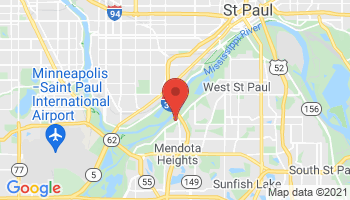
map_locations

Banas Family Law - St. Paul Office
991 Sibley Memorial Highway Suite 200
St. Paul, MN 55118
Work: 651-361-8109
Fax: 651-414-6452

Banas Family Law - Eagan Office
2113 Cliff Drive
Eagan, MN 55122
Work: 651-361-8109
Fax: 651-414-6452


©2012 Banas Family Law, P.A.
Disclaimer
St. Paul, MN Divorce Lawyers
Law Firm Website Design by The Modern Firm
Mobile Version | Standard Version